10 Interactive Direct Mail Examples to Inspire Your 2026 Campaigns
By Paul Bobnak | October 2, 2024
Published October 2024 | Updated June 2026
What if your mail piece could do more than sit on a kitchen counter? Interactive direct mail is any piece that invites the recipient to do something, whether that’s scanning a QR code, scratching a panel, peeling a reveal, visiting a PURL, or speaking a voice command. Instead of passive reading, you get active participation. And the numbers back it up: the average digital display ad pulls a 0.089% click-through rate, while physical direct mail achieves a 4.4% response rate. Interactive mail is one of the reasons that gap keeps growing.
Interactive direct mail follows the AIDA framework (Attention, Interest, Desire, Action), but it adds a physical mechanism that turns readers into participants. Here’s the exciting part: in 2026, interactive mail begins before the piece even arrives. USPS Informed Delivery lets enrolled recipients preview their mail digitally, giving brands a second impression point at no extra postage cost.
Below, we’ll walk you through ten real-world interactive direct mail examples, the psychology behind each tactic, and a best-practices checklist you can put to work in your 2026 campaigns.
Your Interactive Direct Mail Toolkit
Before we get to the examples, let’s look at the interactive mechanics you have at your disposal in 2026:
– QR codes. Smartphone-scannable codes that link to landing pages, donation forms, videos, or app downloads. When generated with Variable Data Printing (VDP), each code can be recipient-specific and individually trackable.
– PURLs (personalized URLs). Unique web addresses pre-populated with recipient data that reduce form friction and log individual responses.
– Augmented reality (AR). Camera-activated overlays that let recipients visualize products in their own space or interact with 3D content.
– Scratch-offs, peel-reveals, and pop-ups. Tactile mechanics that create curiosity and a sense of discovery.
– Product samples. Scent strips, fabric swatches, or texture panels that activate senses email cannot reach.
– Checklists and stickers. Functional elements that invite physical participation and extend in-home life.
– Freemiums. Branded items (magnets, bookmarks, seed packets) that give the piece lasting utility.
– Informed Delivery / digital companion. USPS Informed Delivery sends enrolled users a daily email showing grayscale scans of their incoming mail. As of March 2025, the program has grown to 72.9 million active users. Brands can attach a full-color, clickable “ride-along” digital ad to this preview, turning a single mail piece into a two-touch campaign before the physical piece even lands in the mailbox.
Why Interactive Direct Mail Works So Well
Increased customer engagement
Even static mail outperforms digital channels on open rates. Up to 90% of direct mail is opened, compared to only 20-30% of emails (Data & Marketing Association). Now imagine adding an interactive element on top of that. When recipients have a reason to spend more time with the piece, whether that’s scanning a code, scratching a panel, or peeling a reveal, engagement goes up even further.
Enhanced brand recognition
There’s real science behind this one. Research from Temple University and the USPS Office of Inspector General found that paper ads engaged viewers for more time and produced stronger emotional response and memory recall a week later compared to digital ads. When you add an interactive element like a textured surface or AR experience, you deepen that memory trace even further.
Higher conversion rates
Interactive mail pieces featuring a QR code give you direct, trackable responses. Every person who scans is a high-intent prospect who just self-identified by acting on your piece. When you pair that with VDP-driven personalization, those scans route to landing pages customized to the individual, shortening the path from interest to conversion.
Improved customer retention
Your existing customers already know your brand, so an interactive piece gives them a fresh reason to re-engage, whether that’s a renewal reminder, a loyalty reward, or a timely upsell. According to the Data & Marketing Association, direct mail consistently delivers some of the highest ROI of any marketing channel. For a full breakdown of how to calculate and improve that return, see our guide to direct mail ROI benchmarks and formulas. Interactive elements make retention mailings more memorable, increasing the likelihood that customers act before a competitor’s offer arrives.
Tracking and attribution
One of the biggest wins for interactive direct mail in 2026? Individual-level attribution that rivals digital campaigns. QR scan tracking logs who responded, when, and on what device. PURLs record each visit and every form field completed. And Informed Delivery campaign reports show open rates and click-throughs on your digital companion ad, all before the physical piece even arrives. Together, these tools close the measurement gap that once made direct mail harder to quantify than digital channels.
10 Great Examples of Interactive Direct Mail
For decades, interactive direct mail has engaged audiences with creative, tangible tactics that drive real action. Here are ten examples that show how these mechanics work in practice. As you read through them, think about which ones could work for your next campaign.
1. QR Code (The Nature Conservancy)
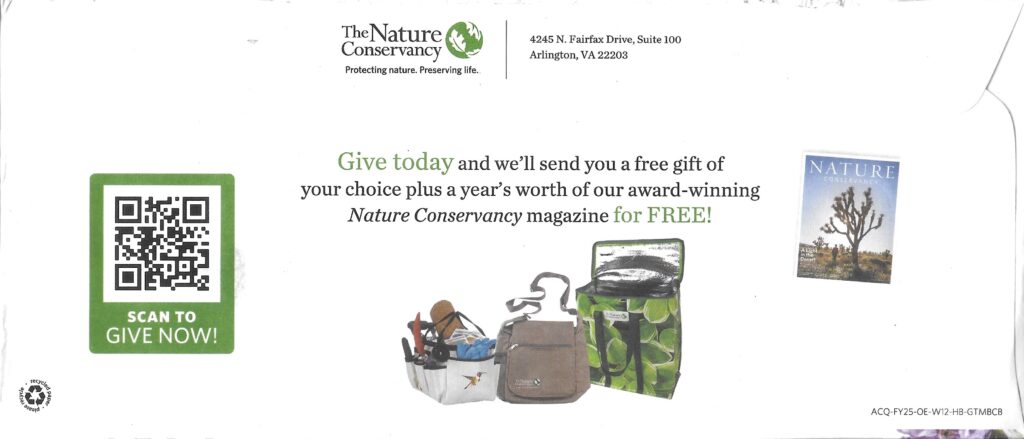
The QR code on the back of this outer envelope gives prospects a single-scan path to join The Nature Conservancy and donate.
Why it works: The QR code pulls double duty as both a response device and a tracking tool. When someone scans it, you know exactly who engaged, which makes follow-up with non-responders much easier. In 2026, QR codes in direct mail can be made recipient-specific through VDP, so each scan routes to a personalized landing page and logs an individual response event. That turns a simple code into a full attribution engine. Nonprofits especially love this approach. Check out more direct mail fundraising examples that use QR codes to bridge mail and digital giving.
2. Product Sample (Function of Beauty)
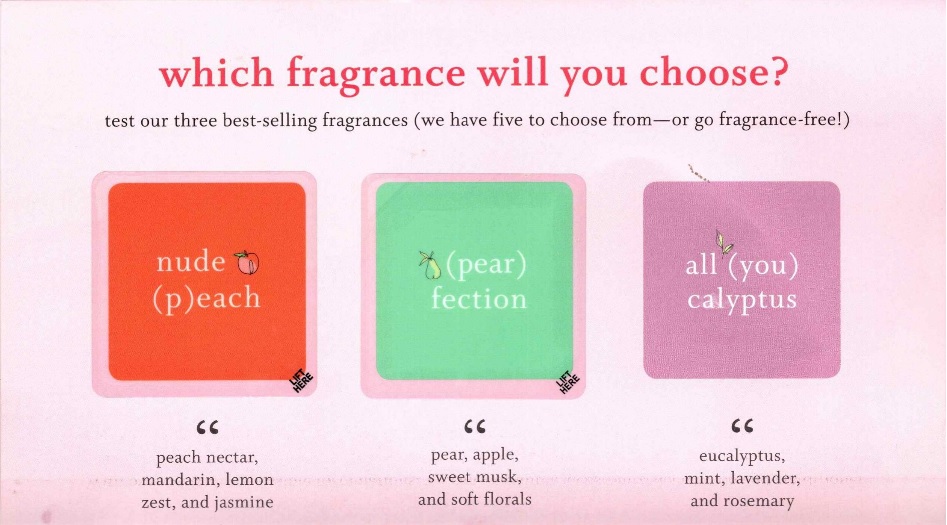
Function of Beauty’s direct mail includes a scent strip of its product formula, allowing the recipient to smell and experience the brand before committing to a purchase.
Why it works: Here’s something email will never be able to do: let someone smell your product. Scent strips and tactile samples create an emotional connection that a banner ad or product photo can’t match. They lower the perceived risk of a first purchase and make the leap from curiosity to checkout feel natural.
3. Personalization (Patient First)
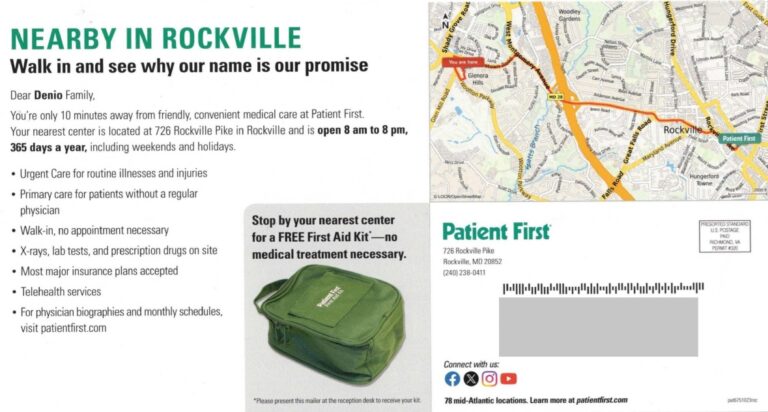
Patient First’s direct mail piece includes a personalized map showing the driving route from the recipient’s home address to the nearest clinic location, printed individually for every recipient.
Why it works: Variable Data Printing (VDP) makes this map possible at scale. Every piece in the print run pulls the recipient’s exact address and renders a unique driving route. This is the same technology that makes personalized offers, images, and copy possible across large mailings. When paired with an Informed Delivery companion showing the clinic’s address, recipients get a digital pre-arrival touchpoint followed by a physical piece that answers the immediate question: “How far is it?”
4. Scratch-Off (Marco’s Pizza)
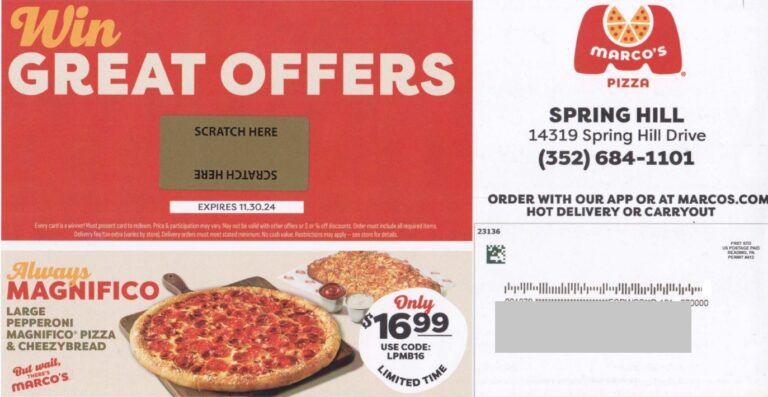
Marco’s Pizza includes a scratch-off panel on its direct mail piece, hiding a discount or special offer that the recipient reveals by scratching.
Why it works: Who doesn’t love a good scratch-off? These elements increase time spent with a mail piece and create a psychological investment in the outcome. That moment of anticipation feels like a game, and the reveal feels earned rather than given. Scratch-off mechanics work especially well for loyalty and re-engagement campaigns where the recipient already knows the brand, because the gamification rewards their existing relationship.
5. Augmented Reality (Empire Today)
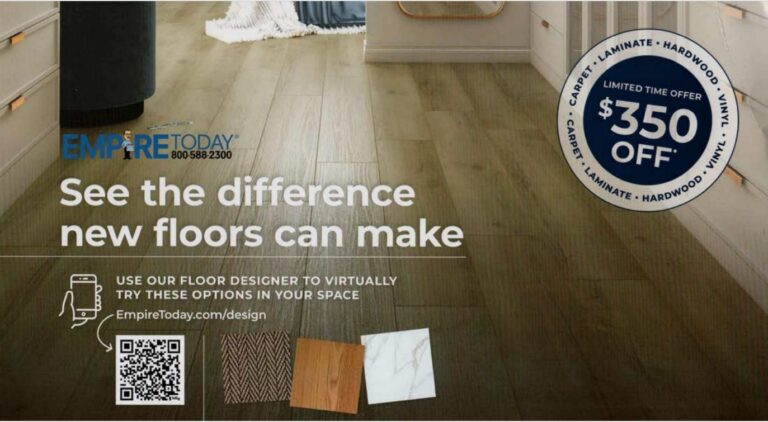
Empire Today’s direct mail piece includes a prompt for recipients to scan an image with their smartphone camera, triggering an AR experience that lets them visualize new flooring in their actual room.
Why it works: AR isn’t just a novelty anymore; it’s a genuine sales tool. Statista estimates 1.07 billion mobile AR users worldwide in 2025, spanning gaming, shopping, and home improvement. Empire Today’s approach removes a major barrier to purchase: uncertainty about what the product will actually look like in the recipient’s space. By turning the mail piece into a virtual showroom, they help the buyer go from “I’m thinking about it” to “I’m ready” without a store visit.
6. 3D design and embossing (Capital One)
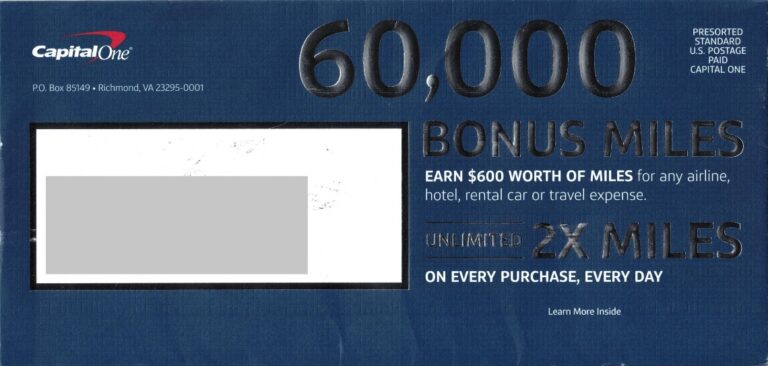
Capital One’s direct mail piece uses embossing and dimensional design to make the brand’s logo and key messaging physically raised on the surface.
Why it works: Embossing is applied during finishing after printing and doesn’t require a different press or format, so it’s accessible for campaigns of nearly any size. Textured elements trigger tactile memory, making the piece more likely to be kept rather than tossed. In a stack of flat mail, a raised surface immediately signals premium quality, reinforcing Capital One’s brand positioning without adding a single word of copy.
7. Checklist (College Ave)
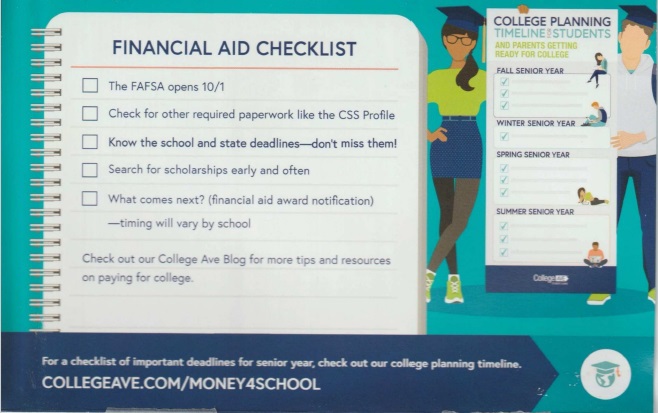
College Ave’s direct mail piece includes a student loan readiness checklist that recipients can work through step by step, checking off items as they evaluate their financial options.
Why it works: Checklists are deceptively powerful because they require active participation. The recipient has to mentally (or physically) engage with each item. For financial products, a checklist helps prospects self-qualify by walking them through their own readiness criteria. By the time they reach the bottom, the CTA feels like a natural next step, not a cold ask.
8. Stickers (CastleWorks)
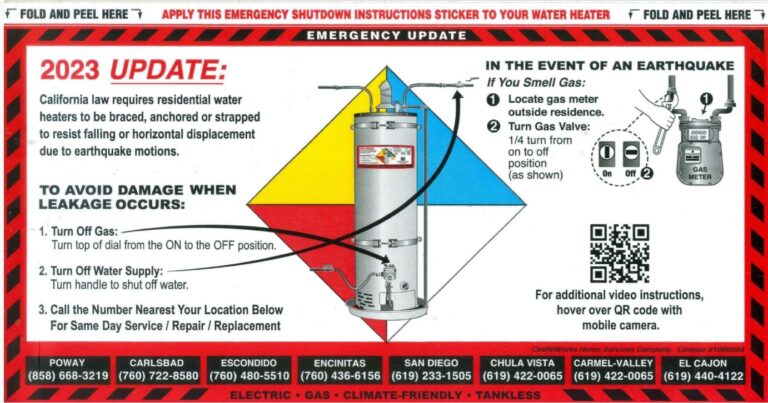
CastleWorks includes a branded maintenance sticker in its direct mail piece, designed to be placed on the recipient’s water heater with the company’s contact information and a service schedule.
Why it works: The sticker stays because it’s genuinely useful, keeping the brand visible every time the homeowner checks their water heater. Think of it as the direct mail equivalent of a branded calendar or notepad. In 2026, functional leave-behinds continue to outperform decorative premiums for service-based businesses because utility equals longevity. The sticker doesn’t ask for attention. It earns repeated impressions by solving a practical problem.
9. PURLs (Wilkes University)

Wilkes University’s direct mail piece includes a personalized URL (PURL) unique to each prospective student, directing them to a private landing page pre-populated with their name and program of interest.
Why it works: A PURL creates a private, named landing page that’s already pre-populated with the recipient’s data, so there’s less form friction, and you know exactly who responded. Combine a PURL with a QR code (the QR routes directly to the PURL) and you’ve got the cleanest attribution path in direct mail: one scan, one identified visitor, one complete response record.
10. Smart Speaker CTA (One Main Financial)
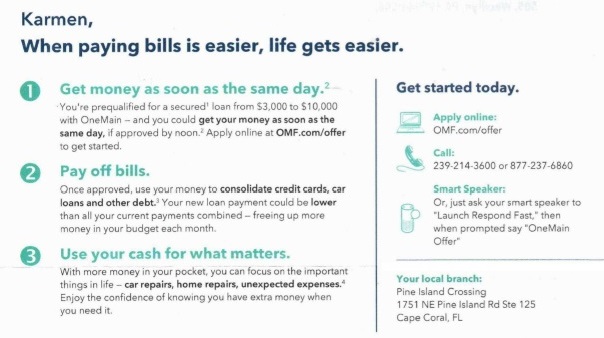
OneMain Financial’s direct mail piece prompts recipients to speak a voice command to their Alexa or Google Home device to learn more about loan options.
Why it works: Smart speaker CTAs have come a long way since their introduction. Voice assistant users in the United States reached 153.5 million in 2025 (DemandSage). The voice response option is particularly effective for older audiences who may prefer speaking to typing, and it creates a frictionless bridge from a physical piece to a digital interaction, no screen, camera, or URL required.
Best Practices for Interactive Direct Mail in 2026
Personalize with Variable Data Printing
Research from Keypoint Intelligence found that personalized direct mail campaigns can yield response rates significantly higher than non-personalized mailings. Our full guide to variable data printing covers how the workflow operates end-to-end. VDP lets you customize every element, including names, offers, images, and maps, without slowing production. Pair personalization with clean data and list services to make sure the right message reaches the right person.
Invest in high-quality printing
Interactive elements only work when the print quality is sharp. A blurry QR code won’t scan. A misregistered scratch-off won’t reveal cleanly. Precision printing protects the mechanics that make your piece interactive, so your recipients engage with your offer, not your production errors.
Tell a story across the piece
Every section of your mail piece should guide the recipient toward one clear action. Use copy, images, and interactive elements in sequence so the reader follows a natural path from the headline to the CTA. When the story flows well, the interactive element feels earned, not gimmicky.
Make your CTA scannable
In 2026, QR codes should be your primary CTA mechanic. They bridge physical and digital and provide individual-level tracking. Size the code at a minimum of 1 inch square, place it where the eye naturally lands, and pair it with a short instruction (“Scan to claim your offer”). Every campaign should include a trackable response path.
Add an Informed Delivery overlay
Pair every USPS First-Class or Marketing Mail campaign with a digital companion ad in the Informed Delivery preview email. It costs nothing beyond standard mail postage and adds a guaranteed second impression before the physical piece arrives. With 72.9 million active users and a 58.6% average email open rate, it’s one of the highest-value additions you can make to any direct mail campaign.
Frequently Asked Questions
What makes direct mail “interactive”?
Interactive direct mail includes any element that requires the recipient to take a physical or digital action, such as scanning a QR code, scratching a panel, peeling a reveal, visiting a PURL, or speaking a voice command. The key is that the piece invites participation rather than passive reading.
How do I track responses from interactive direct mail?
Use QR codes, PURLs, dedicated phone numbers, or unique promo codes to log individual responses. Informed Delivery campaign reports add digital open and click data. Together, these tools give you attribution at the individual level, comparable to what you’d expect from a digital campaign.
Does adding interactive elements increase cost?
Some elements like QR codes and PURLs add minimal cost, especially when generated through VDP during the standard print run. Tactile elements like scratch-offs or embossing do add a finishing step, but the lift in engagement and response typically more than offsets the extra production expense. We’re happy to help you find the right balance between budget and impact.
Can I combine multiple interactive elements in one piece?
Absolutely. A popular 2026 approach is to pair a personalized QR code with an Informed Delivery companion ad and a tactile element like embossing. Layering mechanics gives recipients multiple reasons to engage without cluttering the piece, as long as each element serves the same CTA.
Ready to Make Your Next Campaign Interactive?
In 2026, direct mail is the highest-performing physical marketing channel because it combines tangibility, personalization, and measurable response. Interactive elements amplify those strengths by giving recipients a reason to engage, not just read.
At Mailing.com, we’ve been doing this for nearly 60 years, and we handle everything in-house, from data and list services and Variable Data Printing to precision printing and On-Site USPS Verification. Whether you need recipient-specific QR codes, VDP-driven personalization, or Informed Delivery campaign setup, we’ll get your interactive mail from concept to mailbox, on time and on budget.